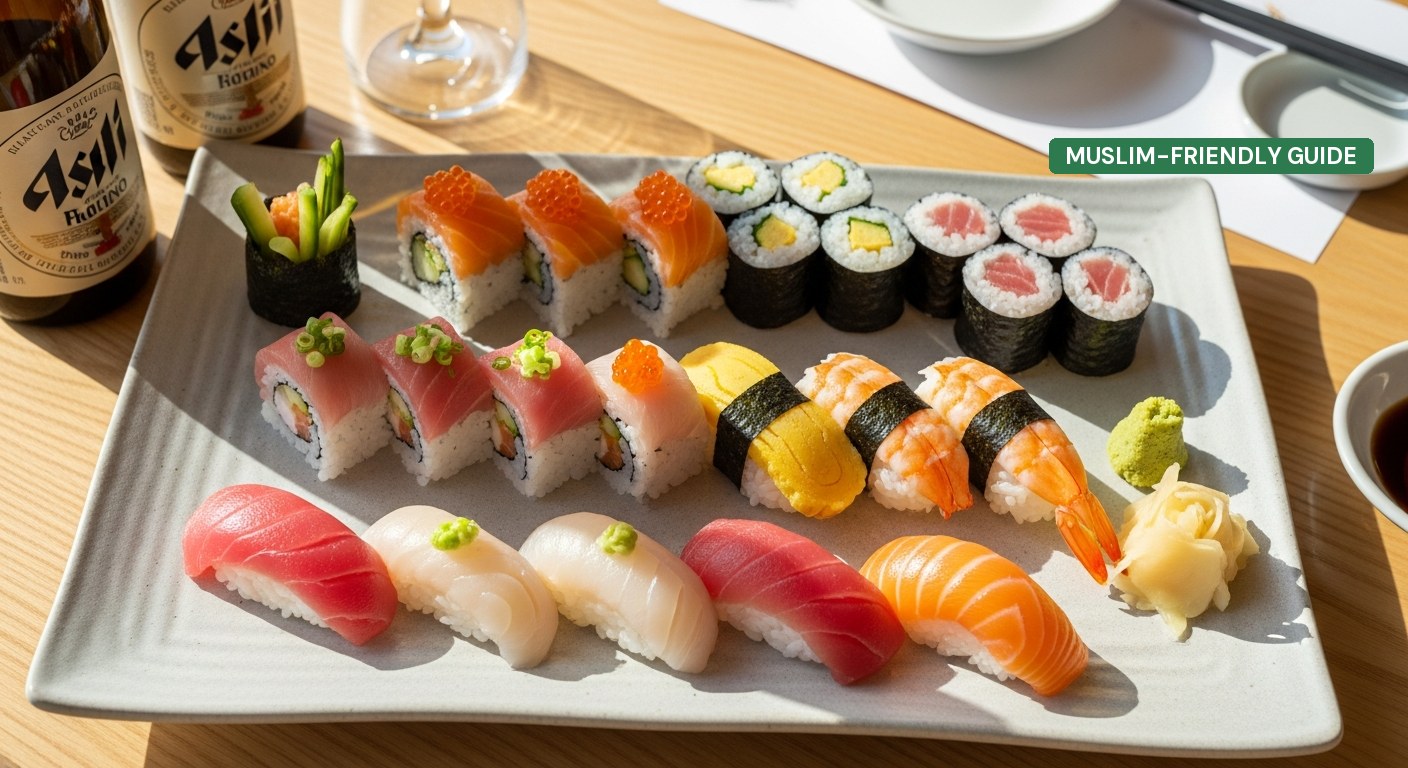
Looking for halal food in Namba, Osaka? Three verified Muslim-friendly sushi counters serve the area — from an all-you-can-eat crab-and-nigiri feast to a hand-roll specialist and a hands-on sushi-making class. All three avoid pork and alcohol in their halal menus, making them solid choices for Muslim travelers exploring Namba. Check our Osaka halal guide for the full picture.
MICHI’s Pick — Selected by our Osaka-based team, based on places we’ve visited and on research using Tabelog and Google Maps ratings. In Japan, a Tabelog score of 3.4+ is genuinely high — Japanese reviewers are famously strict, and most locals consider anything above 3.4 a place worth a detour. We feature venues meeting at least one of: Tabelog 3.4+, Google Maps 4.3+, or 100+ reviews — the kind of spots locals quietly trust.
Tabelog and Google Maps scores are accurate as of the time of writing.
1. FUJIYAMA TOKYO Osaka Namba
The only all-you-can-eat sushi and crab restaurant in the Namba area to operate a dedicated Muslim-friendly course — a genuinely rare format in Japan.
- ☪️ Halal status: Muslim-friendly
- 🍣 Must-order: Muslim-Friendly Halal Sushi & Snow Crab Course — All-You-Can-Eat (¥10,398)
- 📍 Access: Yotsubashi Station (30 sec walk) / Namba Station (8 min walk, Exit 26-C)
- 🕒 Hours: 16:00–23:00 (Open daily)
- 📞 Reservation: Required
- 🧎 Prayer room: Available on-site
- 🍷 Alcohol served: Yes
- 🗣 English menu: Yes
- ⭐ Rating: Google 4.8 (1,796 reviews) (as of writing)
- 🗺 View on Google Maps
- 🔗 Source: halalfoodmaps.com
What to order: The Muslim-Friendly Halal Sushi & Snow Crab Course is the signature draw — all-you-can-eat sushi using halal-certified seasonings, including premium cuts like fatty tuna, salmon roe, and sea urchin, plus unlimited snow crab. This course requires advance reservation, as it involves procuring dedicated ingredients and preparing a separate cooking area.
2. TEMAKISUSHI YOSAKURA Namba
A hand-roll sushi counter right in the heart of Namba — rated 4.9 out of 5 across over 1,000 reviews — that caters specifically to Muslim diners with a halal-friendly menu.
- ☪️ Halal status: Muslim-friendly
- 🍣 Must-order: Temaki (hand-roll) sushi set
- 📍 Access: Namba Station (3 min walk)
- 🕒 Hours: Check with shop (Open daily)
- 📞 Reservation: Not needed
- 🧎 Prayer room: None
- 🍷 Alcohol served: No
- 🗣 English menu: Yes
- ⭐ Rating: Google 4.9 (1,083 reviews) (as of writing)
- 🗺 View on Google Maps
- 🔗 Source: halalfoodle.com
What to order: The staff are welcoming and the fish is fresh — reviewers specifically highlight being able to enjoy authentic Japanese sushi and unagi in a halal-friendly setting without stress. The temaki format — where the chef rolls each piece to order in front of you — makes this one of the most interactive sushi experiences in Namba, and a great introduction to the best food in Osaka.
3. Sushi Making Experience Namba
Osaka’s most popular sushi-making class in the Dotonbori area, where you make 12 pieces of nigiri and gunkan sushi yourself, guided in English, Chinese, and Korean.
- ☪️ Halal status: Muslim-friendly
- 🍣 Must-order: Halal Sushi Making Course — 12-piece nigiri & gunkan (from ¥4,000)
- 📍 Access: Shinsaibashi Station (3 min walk) / Namba Station (7 min walk) — Nishishinsaibashi, adjacent to Dotonbori
- 🕒 Hours: Multiple sessions daily (check official site for schedule)
- 📞 Reservation: Required
- 🧎 Prayer room: None
- 🍷 Alcohol served: No
- 🗣 English menu: Yes
- 🗺 View on Google Maps
- 🔗 Source: groovyjapan.com
What to order: The Halal Sushi Making Course uses halal seasoning throughout — you leave with 12 pieces you made yourself and a genuine feel for washoku craft. It’s a particularly good option for families or first-time visitors who want to understand Japanese food culture before sitting down at a counter — and pairs well with everything else you can do when you explore more of Namba.
Frequently Asked Questions
Q. Is it easy to find halal food in Namba, Osaka?
Most of Osaka’s halal restaurants cluster around Namba, Dotonbori, Umeda, and Shinsaibashi, making Namba one of the most accessible areas in Japan for Muslim diners. Sushi specifically is harder to find halal than ramen or curry, but the three venues above cover the main formats — counter dining, hand-rolls, and a hands-on class.
Q. What does “Muslim-friendly” mean in Japan?
In Japan, “Muslim-friendly” means a restaurant avoids pork and alcohol in the dishes it designates for Muslim customers, and typically uses halal-certified seasonings and separate utensils. It does not mean the store is formally halal-certified — some menu items are Muslim-friendly while the kitchen is shared, though cooking utensils are kept separate from non-halal use. Always confirm the specific policy with the restaurant before ordering.
Q. Are there prayer rooms near halal restaurants in Namba?
FUJIYAMA TOKYO’s Namba location offers a dedicated prayer room — a rarity in sushi restaurants. For the other venues on this list, the nearest public prayer space is the Osaka Mosques and Islamic centers reachable within 15–20 minutes by subway; the Namba area itself has limited on-site prayer facilities, so plan your prayer times around your meal booking.
Q. What hidden ingredients should Muslim travelers watch out for in Japan?
Mirin (sweet rice wine) and sake are used in many Japanese sauces and marinades, including soy-based glazes on sushi rice and tamago. Dashi stock is often made from bonito (fish) but occasionally contains pork-derived additives. At Muslim-friendly restaurants, ask specifically whether the sushi vinegar, soy sauce, and any sauces are halal-certified — the venues above all confirm halal seasonings, but standard Japanese sushi counters do not.
Last updated: July 28, 2026 · Corrections: [email protected]