Last updated: July 3, 2026
This article reflects information available at the time of writing. Check Google Maps for the latest hours and availability.
Introduction
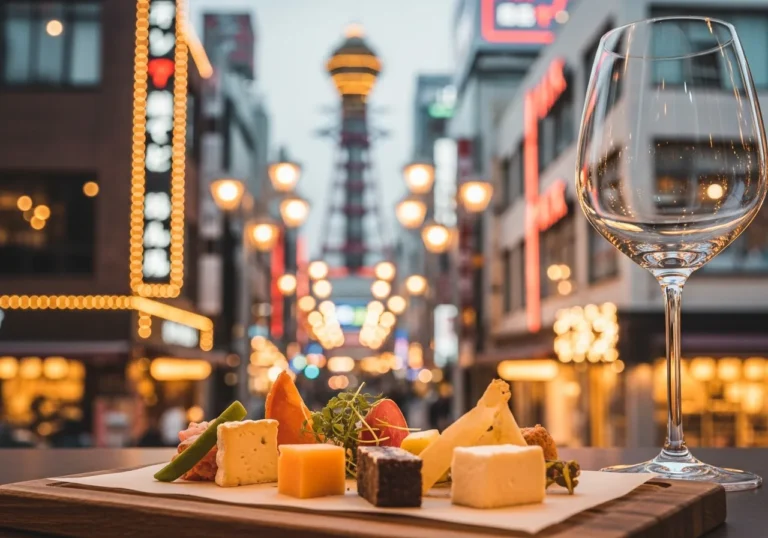
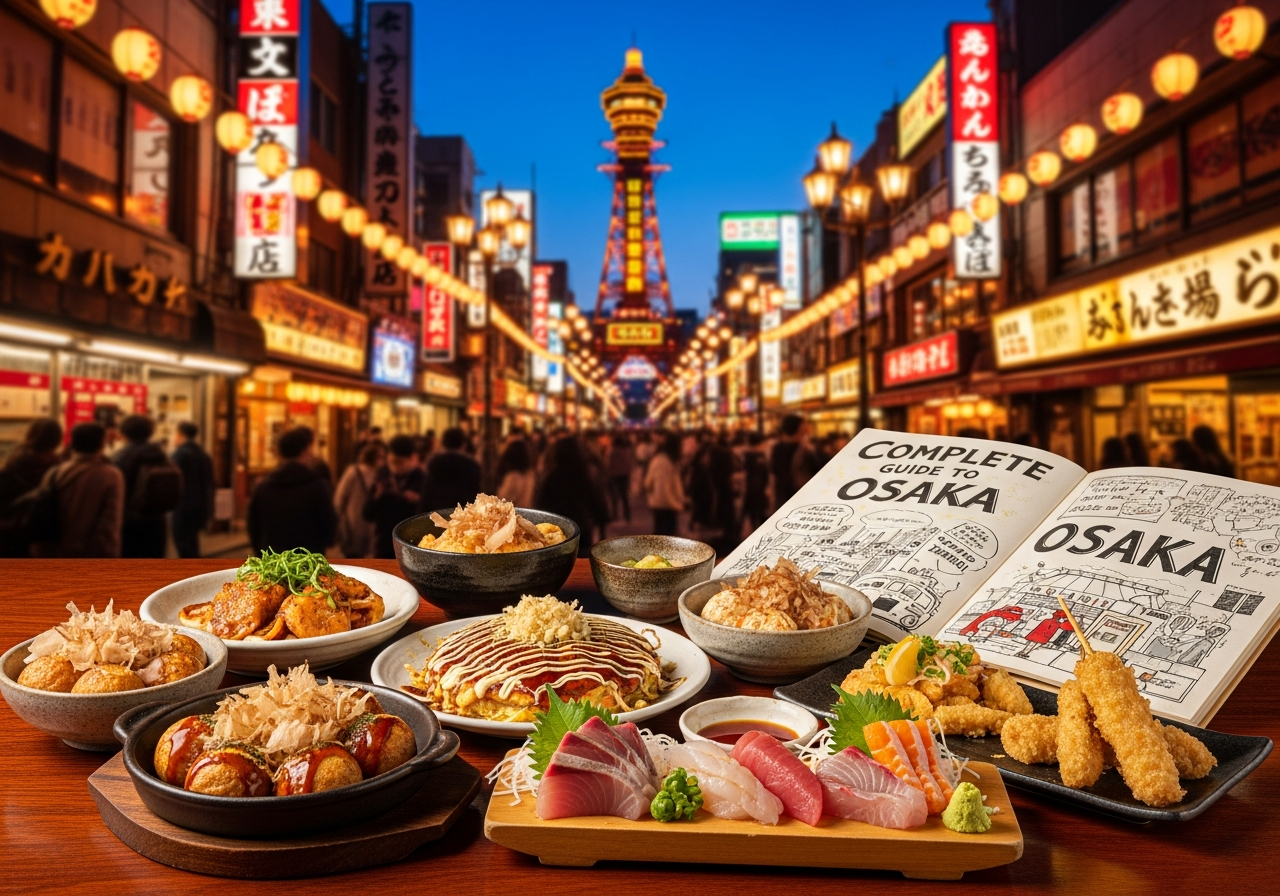
Shinsekai translates to “New World” — and while this retro district south of central Osaka was indeed cutting-edge when it opened in 1912, it feels more like stepping into a time machine than visiting the future. Built to mirror Paris in the north and Coney Island in the south, today’s Shinsekai pulses with neon signs, pachinko parlours, and the smoky aromas of deep-fried kushikatsu. Tsutenkaku Tower looms over narrow streets packed with kushikatsu joints, old-school coffee shops, and traditional bathhouses — a living museum of Osaka’s working-class culture that somehow survived urban renewal.
What makes Shinsekai special isn’t just its history — it’s how genuinely local it remains despite heavy tourist traffic. The district teems with people looking for cheap, delicious food, with many restaurants staying open until around 10 p.m. and some operating 24 hours. From the legendary “no double dipping” rule at kushikatsu counters to the original mixed juice that originated in 1948 at a fruit shop that became Sennariya Coffee, this is where Osaka’s street food culture was born. Expect queues, cash-only payments, and some of the best value eating in Japan.
1. Kushikatsu Daruma Shinsekai Main Store (新世界元祖串かつ だるま)
- 📍 2-3-9 Ebisuhigashi, Naniwa-ku, Osaka
- 🕐 Mon-Fri: 11:00–22:30 (L.O. 22:00), Sat-Sun-Holidays: 10:30–22:30 (L.O. 22:00) (as of May 2026)
- 💰 Budget per person: ¥1,500–2,500 (food only) / ¥2,000–3,000 (with drinks)
- 🚃 Dobutsuen-mae Station (6 min walk)
- 🗺 Open in Google Maps
- 🌐 Official site
What to order: Original kushikatsu (¥143)
The grandfather of all kushikatsu shops, founded in 1929 with just 12 counter seats, now spawning 15 locations across Osaka but maintaining its original crispy-light batter and secret sauce recipe. Their special cooking oil makes the kushikatsu light and easy to eat without the heaviness that plagues many deep-fried dishes.
2. Yaekatsu (八重勝)
- 📍 3-4-13 Ebisuhigashi, Naniwa-ku, Osaka
- 🕐 10:30–21:00 (as of May 2026)
- 💰 Budget per person: ¥1,500–2,000 (food only) / ¥2,000–2,500 (with drinks)
- 🚃 Dobutsuen-mae Station (3 min walk)
- 🗣 English menu: Not available
- 🗺 Open in Google Maps
- 📋 Tabelog
What to order: Kushikatsu set of 3 (¥330), Doteyaki (¥330)
The popular Yaekatsu restaurant in Shinsekai always has a long line outside, but kushikatsu joints are known for quick turnover — most people can get in within 30 minutes, so brave the line for their exceptional skewers. Their secret: adding mountain potato to the batter, creating a fluffy texture with superior oil drainage.
3. Sennariya Coffee (千成屋珈琲)
- 📍 3-4-15 Ebisuhigashi, Naniwa-ku, Osaka
- 🕐 Weekdays: 11:30–19:00, Weekends-Holidays: 9:00–19:00 (as of May 2026)
- 💰 Budget per person: ¥500–1,000 (drinks and light food)
- 🚃 Dobutsuen-mae Station (3 min walk)
- 🗺 Open in Google Maps
- 📋 Tabelog
- 🌐 Official site
What to order: Mixed Juice (¥500)
Founded in 1948 as a fruit shop, the owner began blending overripe fruit into drinks — creating the original mixed juice that became legendary among locals who declared it “delicious!” This thick, creamy blend of fruit and milk is a nostalgic Kansai favourite that was long considered a Kansai-only classic before spreading throughout Japan.
4. Grill Bon (グリル梵)
- 📍 1-17-17 Ebisuhigashi, Naniwa-ku, Osaka
- 🕐 12:00–14:00 (L.O.), 17:00–19:30 (L.O.) (as of May 2026)
- 💰 Budget per person: ¥1,500–2,500 (food only)
- 🚃 Ebisucho Station (3 min walk)
- 🗺 Open in Google Maps
What to order: Beef katsu sandwich (¥1,100)
Founded by a chef who learned Western cuisine at Kobe’s Oriental Hotel, this three-generation family restaurant moved to Shinsekai in 1961 and has maintained consistent quality for over 70 years. Their legendary beef katsu sandwich was beloved by kabuki and film actors as a backstage gift because it stays delicious even when cold.
5. Daiko Sushi Main Store (大興寿司 本店)
- 📍 3-2-18 Ebisuhigashi, Naniwa-ku, Osaka
- 🕐 11:00–21:00 (as of May 2026)
- 💰 Budget per person: ¥1,000–2,000 (food only) / ¥1,500–2,500 (with drinks)
- 🚃 Dobutsuen-mae Station (3 min walk)
- 🗣 English menu: Not available
- 🗺 Open in Google Maps
- 📋 Tabelog
What to order: Three-piece sushi set (¥150)
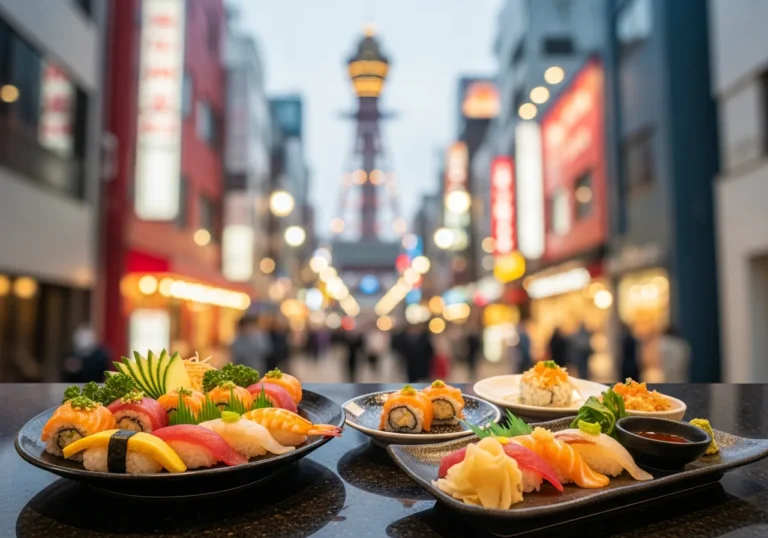
Founded in 1952, this historic sushi counter serves fresh fish at prices that put conveyor belt chains to shame — three pieces per plate starting at just ¥150. This affordable sushi spot in Shinsekai offers over 60 types of toppings with three pieces starting at ¥150, providing exceptional value for money.
6. New World Kankan (新世界 かんかん)
- 📍 3-5-16 Ebisuhigashi, Naniwa-ku, Osaka
- 🕐 Wed-Sun: 10:00–19:30 (Closed Mon-Tue, except holidays) (as of May 2026)
- 💰 Budget per person: ¥300–800 (food only)
- 🚃 Dobutsuen-mae Station (4 min walk)
- 🗺 Open in Google Maps
What to order: Takoyaki 8 pieces (¥500)
Opening 23 years ago when Shinsekai lacked a single takoyaki stand, Kankan became the district’s original takoyaki shop and a media darling. Their perfectly crispy exterior hides molten centers made with dashi-rich batter, topped with generous helpings of real bonito flakes instead of powder.
7. Tengu (てんぐ)
- 📍 3-4-12 Ebisuhigashi, Naniwa-ku, Osaka
- 🕐 10:30–20:00 (L.O. 19:00), Closed Mondays (as of May 2026)
- 💰 Budget per person: ¥1,500–2,000 (food only) / ¥2,000–2,500 (with drinks)
- 🚃 Dobutsuen-mae Station (3 min walk)
- 🗺 Open in Google Maps
What to order: Doteyaki 3 pieces (¥300)
Located next to the legendary Yaekatsu in Janjan Yokocho, Tengu is famous for connections to Kinnikuman manga creator Yudetamago, with handprints and manga scenes displayed in-store. Their specialty doteyaki features tender beef tendon simmered in sweet white miso sauce that’s rich but never cloying.
8. Gifuya Honke (ぎふや本家)
- 📍 2-5-9 Ebisuhigashi, Naniwa-ku, Osaka
- 🕐 Mon-Thu: 11:00–22:00 (L.O. 21:00), Fri-Sat: 11:00–1:00 (L.O. 24:00), Sun-Holidays: 10:00–22:00 (L.O. 21:00) (as of May 2026)
- 💰 Budget per person: ¥2,000–3,000 (food only) / ¥2,500–3,500 (with drinks)
- 🚃 Dobutsuen-mae Station (4 min walk)
- 🗺 Open in Google Maps
What to order: Salmon kushikatsu (¥300)
Founded in 1916, this century-old kushikatsu institution offers both traditional skewers and full restaurant service with an impressive range of meat sushi and creative dishes. Their signature “doro-taki” resembles thick ramen broth and pairs perfectly with an array of kushikatsu including standout plump salmon.
How to Order
Most kushikatsu shops operate on simple systems: point at what you want from the display case or use the provided pencil and paper to write your order. Remember the cardinal rule — “no double dipping” in the shared sauce containers for hygiene reasons. Staff typically provide free cabbage and sauce at every table.
At sushi counters, order by writing quantities on paper — most places serve sets of three pieces. Many shops are cash-only, so bring yen. The atmosphere encourages quick eating and drinking, perfect for bar-hopping through the district.
For takoyaki and street food, simply tell them how many orders you want. Staff often ask “What portion sizes?” and provide the right number of skewers for sharing. Most vendors cook continuously, so food arrives quickly and scorching hot.
FAQ
Q: Is eating in Shinsekai expensive?
A: Shinsekai offers exceptional value — kushikatsu typically costs ¥150–300 per skewer, doteyaki around ¥300 for three pieces, sushi sets from ¥150 for three pieces. Budget ¥1,500–2,500 per person for a satisfying meal with drinks.
Q: Do shops in Shinsekai have English menus?
A: Most traditional spots don’t offer English menus, but ordering is straightforward through pointing or writing numbers.